
Reach to Wicken
part of Cambridge to Isleham

Previous Stow cum Quy to Reach
Next Wicken to Isleham
Two walks:
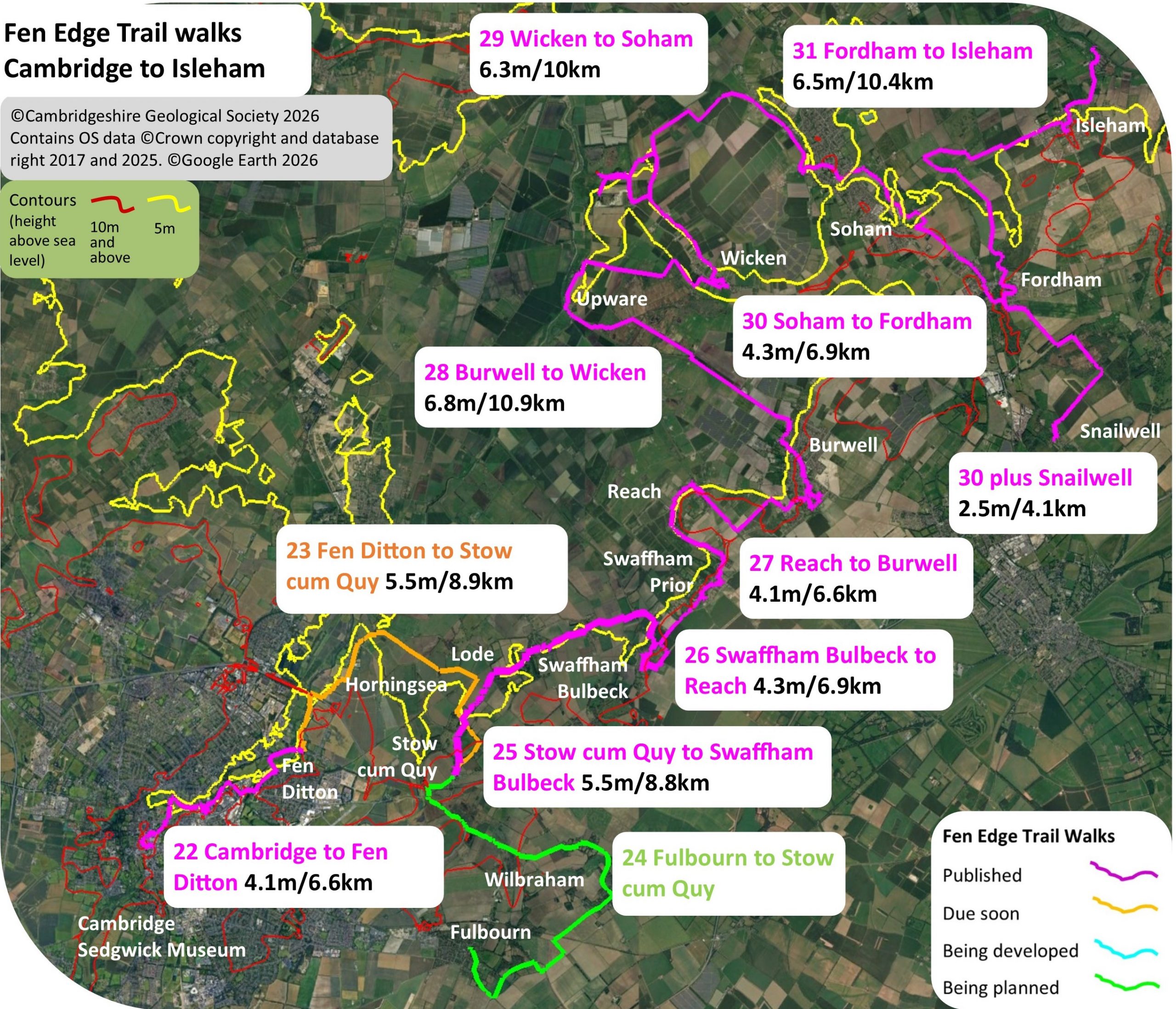
The next two walks on the Trail between Cambridge and Isleham (the Suffolk border).
1 (27) Reach to Burwell – published
2 (28) Burwell to Wicken via Upware – published
Download the Walk Guides below
Walk 1 (27): Reach to Burwell
DOWNLOAD WALK GUIDE
‘This walk includes a wealth of past economic geology’
The route: ‘from the fen up onto the Chalk hills, and back down to the lodes’
4.1 miles (6.6 km) Walking guide time 2hrs 30mins plus stops
‘This walk includes a wealth of past economic geology’
The route: ‘from the fen up onto the Chalk hills, and back down to the lodes’
4.1 miles (6.6 km) Walking guide time 2hrs 30mins plus stops
In partnership with
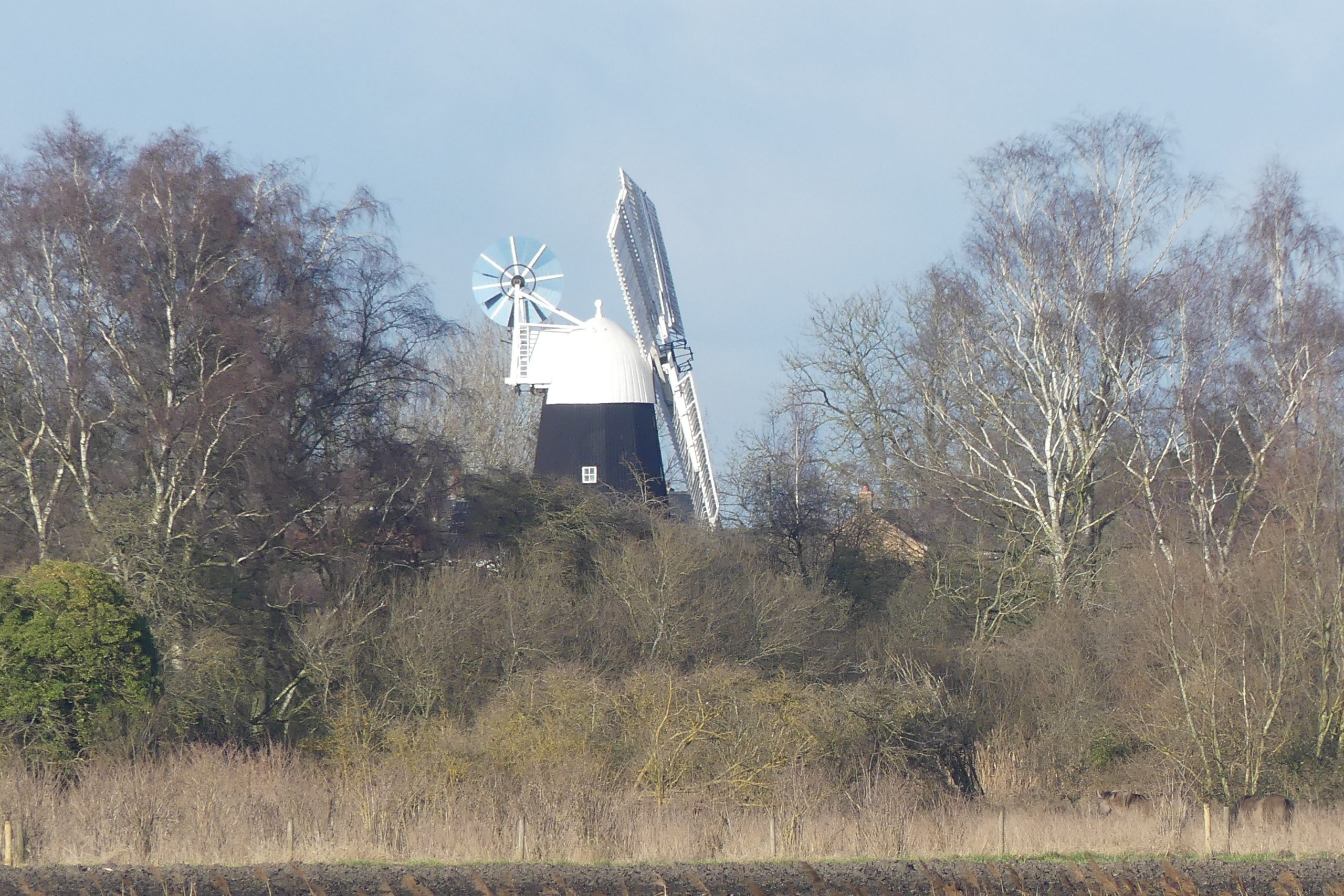
Burwell Museum and Windmill
In partnership with
Burwell Museum and Windmill
Having travelled from Cambridge along the south eastern Fen Edge, this walk connects the two historic villages of Reach and Burwell. Rising out of the fen up towards the Chalk ridge, it meanders through a linear village and then takes you back down to the 5 m contour, ending by one of the famous fen lodes. You first walk along the Devil’s Dyke, an Anglo Saxon (7th century) defensive construction. This imposing rampart and ditch runs straight from the boggy fen up to the wooded Chalk highlands at Wood Ditton (7.5 miles from Reach), an important area with King Anna’s settlement in Exning nearby.
Having travelled from Cambridge along the south eastern Fen Edge, this walk connects the two historic villages of Reach and Burwell. Rising out of the fen up towards the Chalk ridge, it meanders through a linear village and then takes you back down to the 5 m contour, ending by one of the famous fen lodes. You first walk along the Devil’s Dyke, an Anglo Saxon (7th century) defensive construction. This imposing rampart and ditch runs straight from the boggy fen up to the wooded Chalk highlands at Wood Ditton (7.5 miles from Reach), an important area with King Anna’s settlement in Exning nearby.
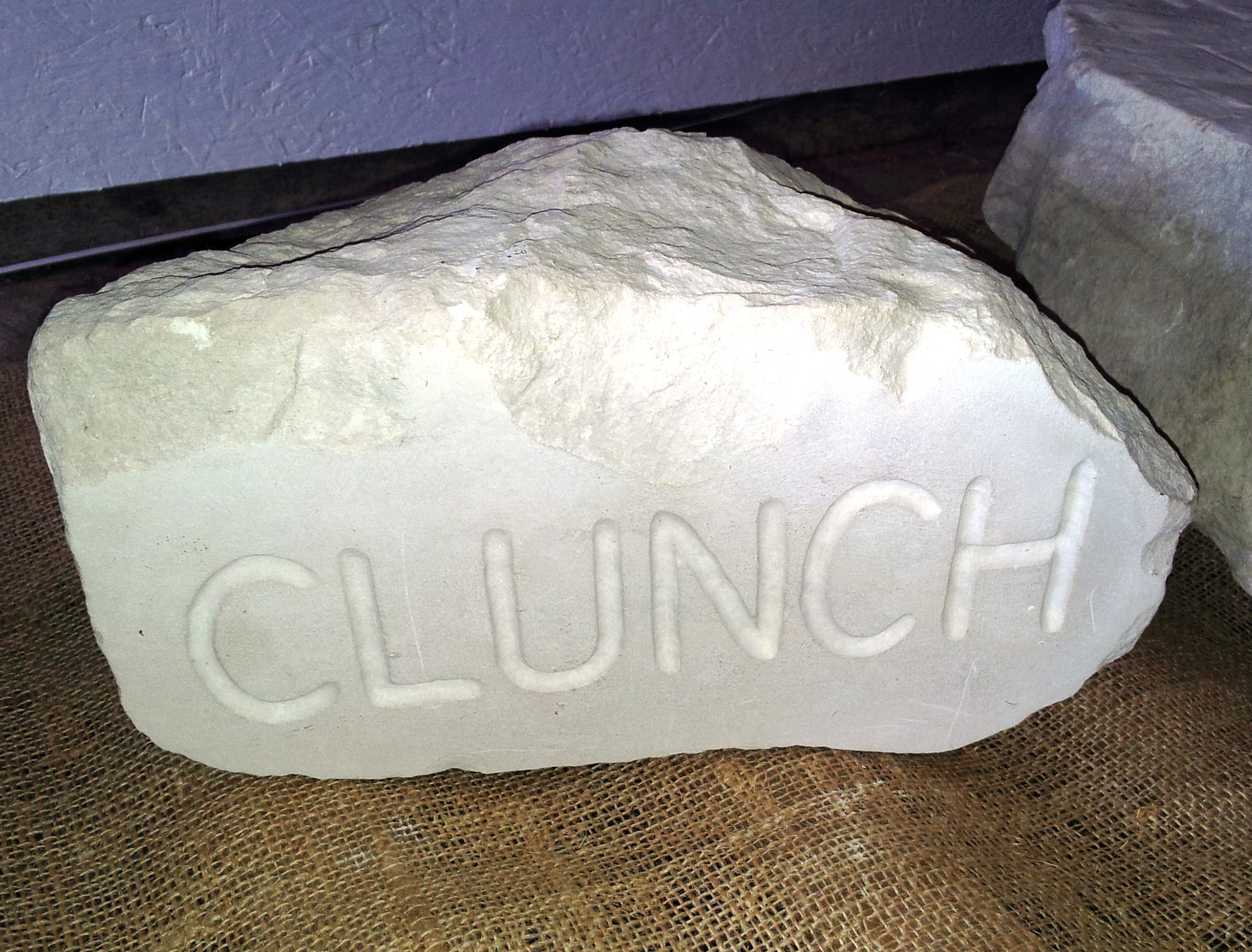
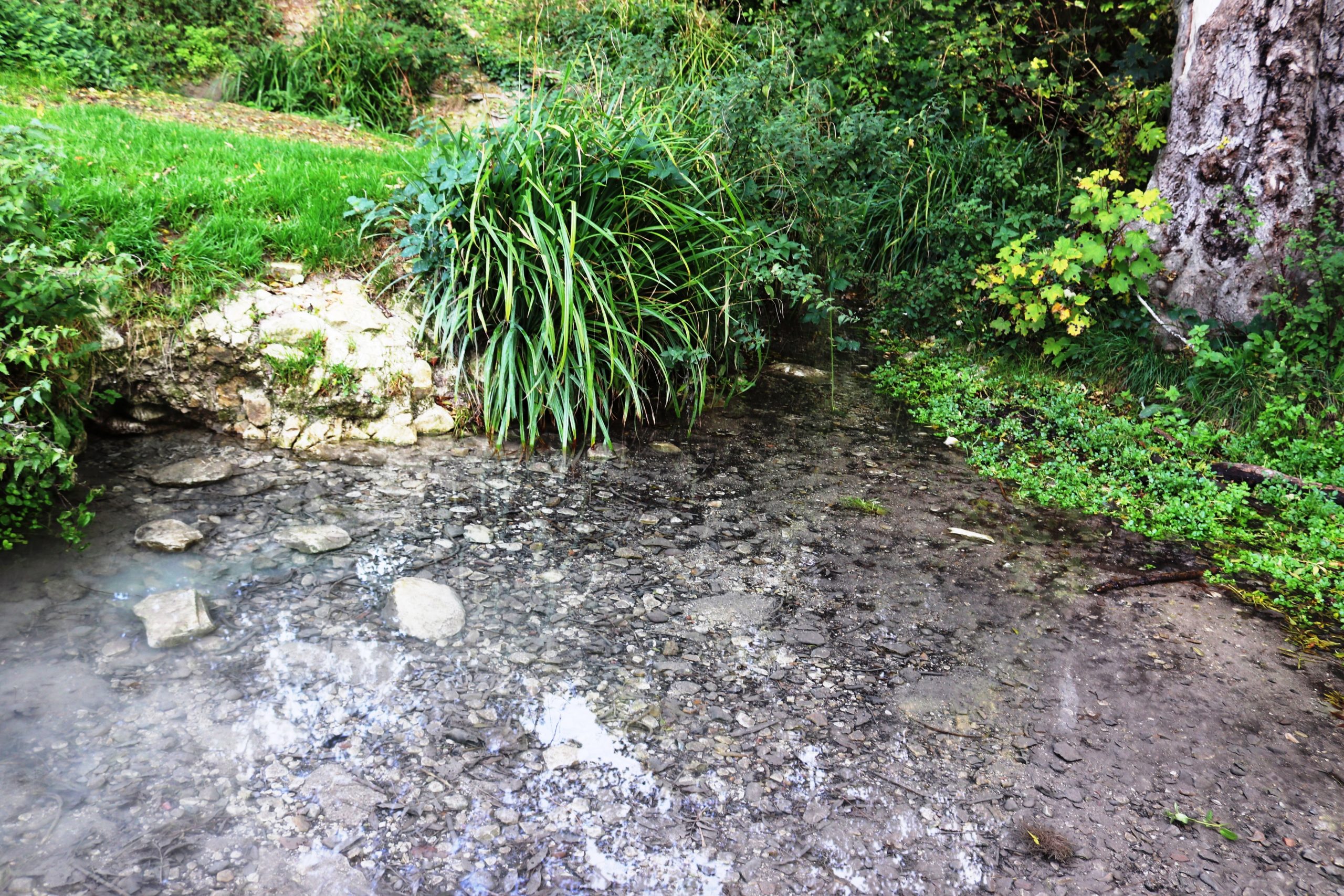
The large village of Burwell is steeped in history, owing its success to the freshwater springs at the base of the Totternhoe Stone and the quarrying of this famous rock for building stone, lime and cement. Phosphate in the form of ‘coprolites’ was also mined from the Cambridge Greensand, a layer at the base of the Chalk that is now just below the surface of the Fen Edge, and the yellow brick came from the Gault clay pits to the west of the village. You visit two Local Geological Sites, seeing several springs and an accessible quarry into the Zig Zag Chalk. You also pass a ruined castle, a marvelous example of a perpendicular church and some very ancient houses. Look out for the informative black plaques erected by the Burwell History Society along the way.





Walk 2 (28): Burwell to Wicken
plus additional walk around National Trust Wicken Fen National Nature Reserve
DOWNLOAD WALK GUIDE
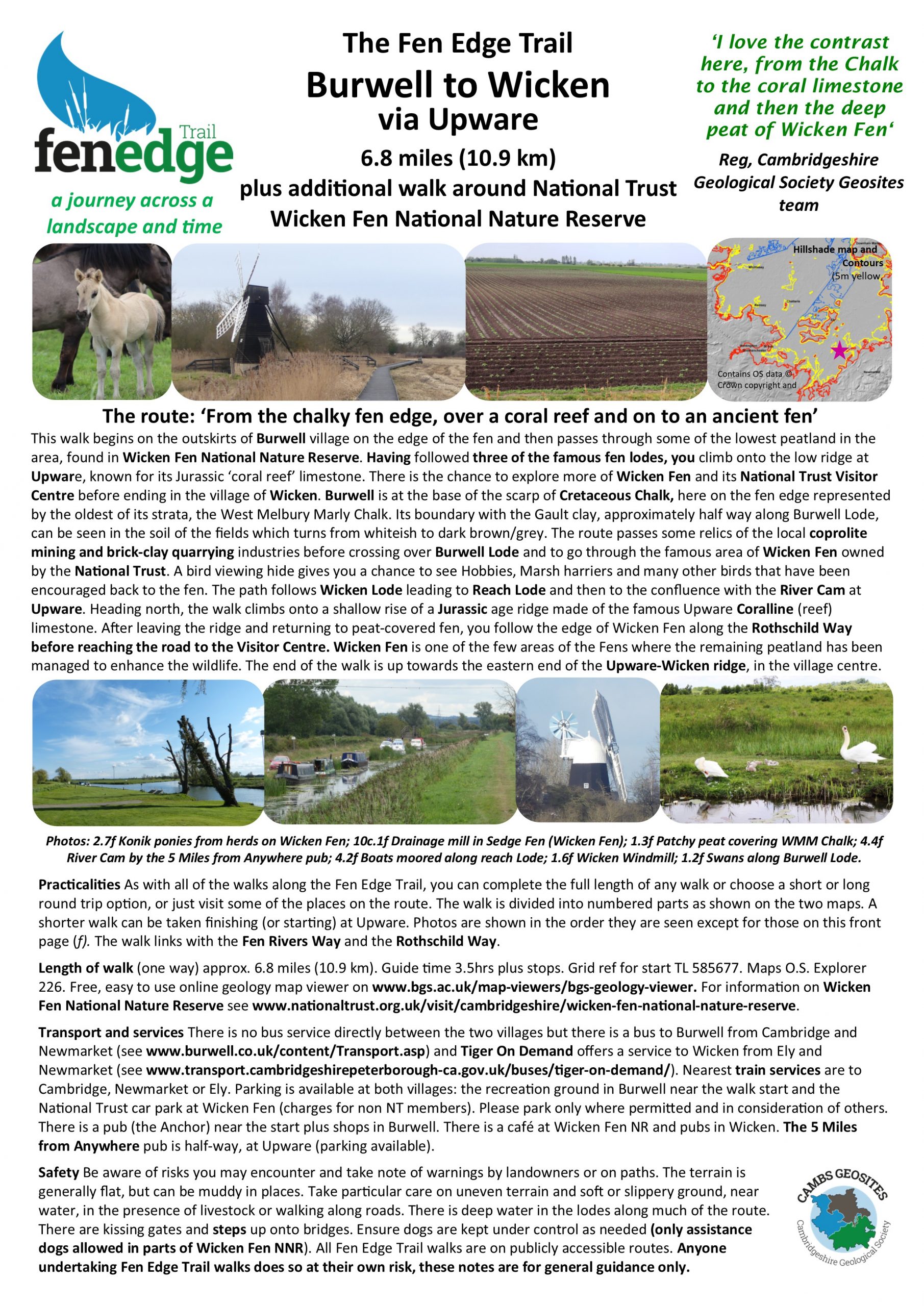
‘I love the contrast here, from the Chalk to the coral limestone and then the deep peat of Wicken Fen’
The route: ‘From the chalky fen edge, over a coral reef and on to an ancient fen’
6.8 miles (10.9 km) Walking guide time 3hrs 30mins plus stops
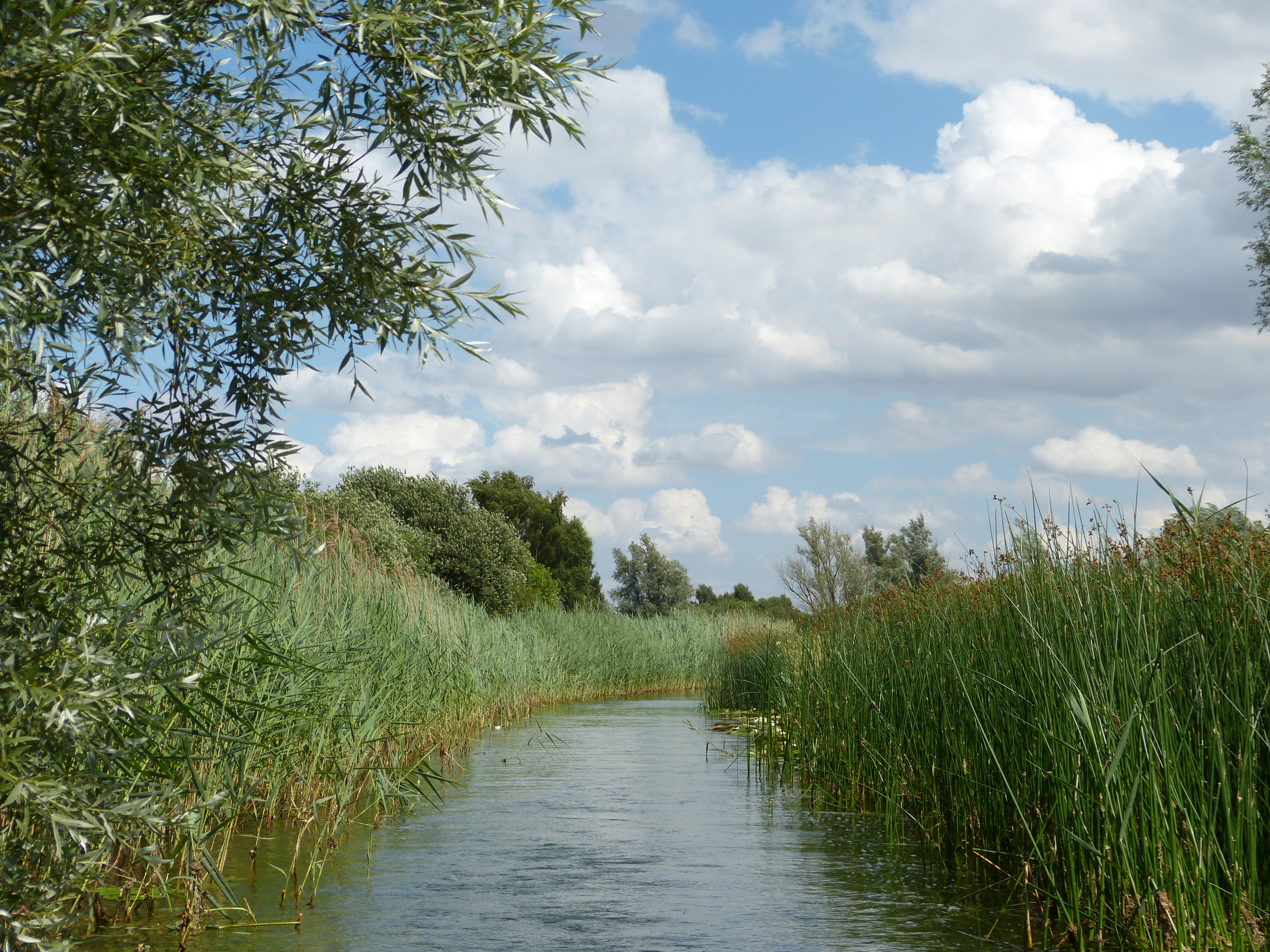
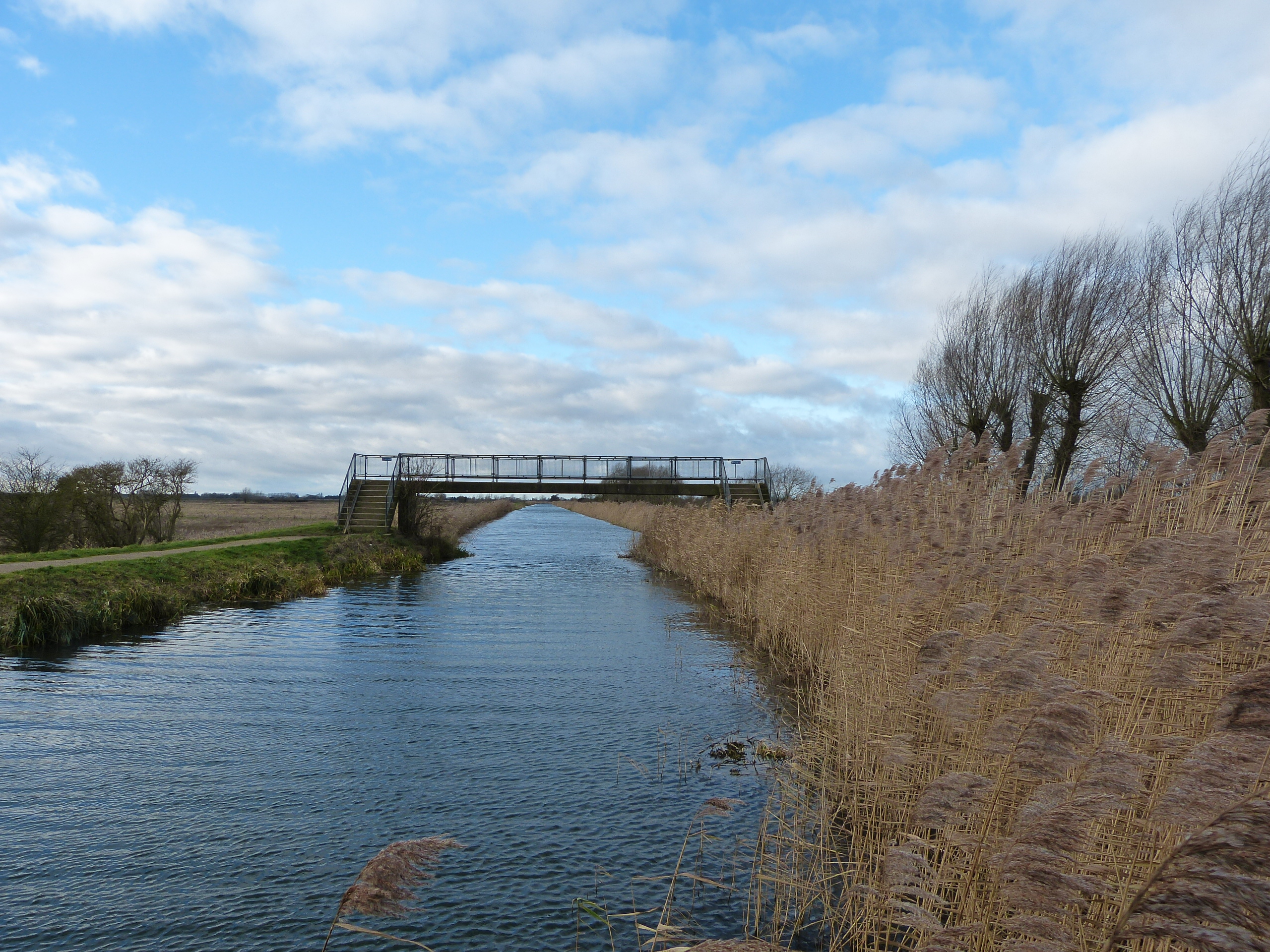
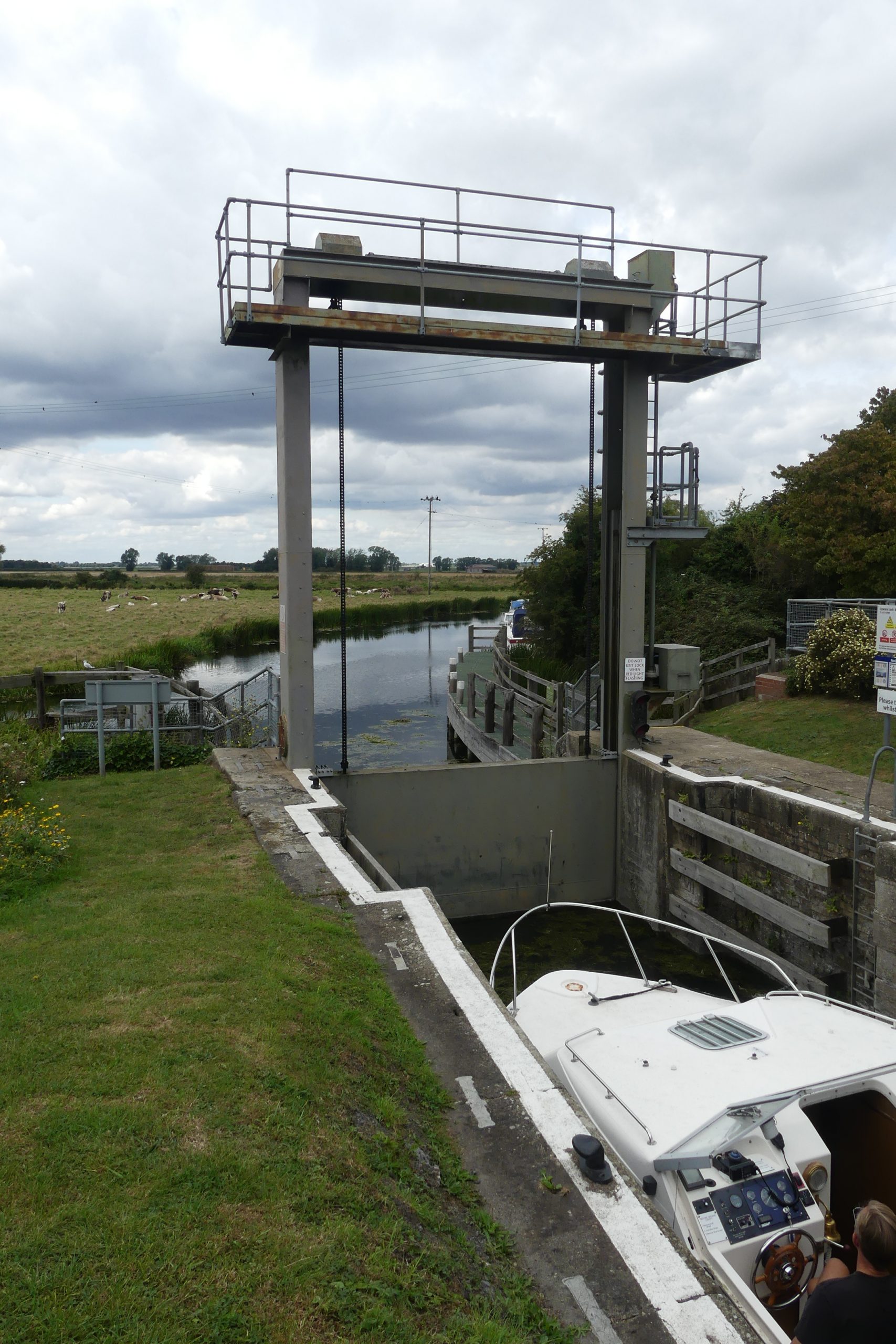
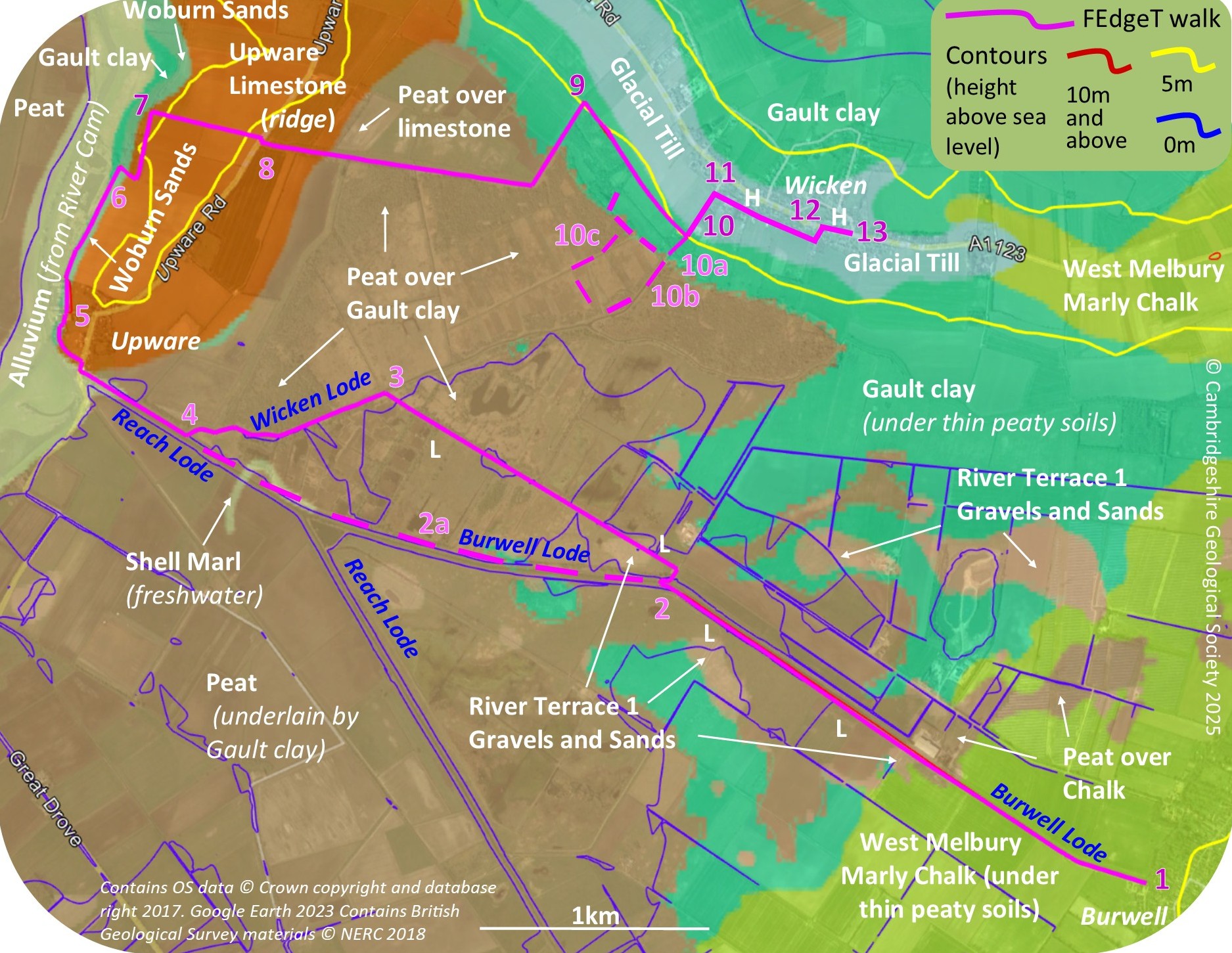
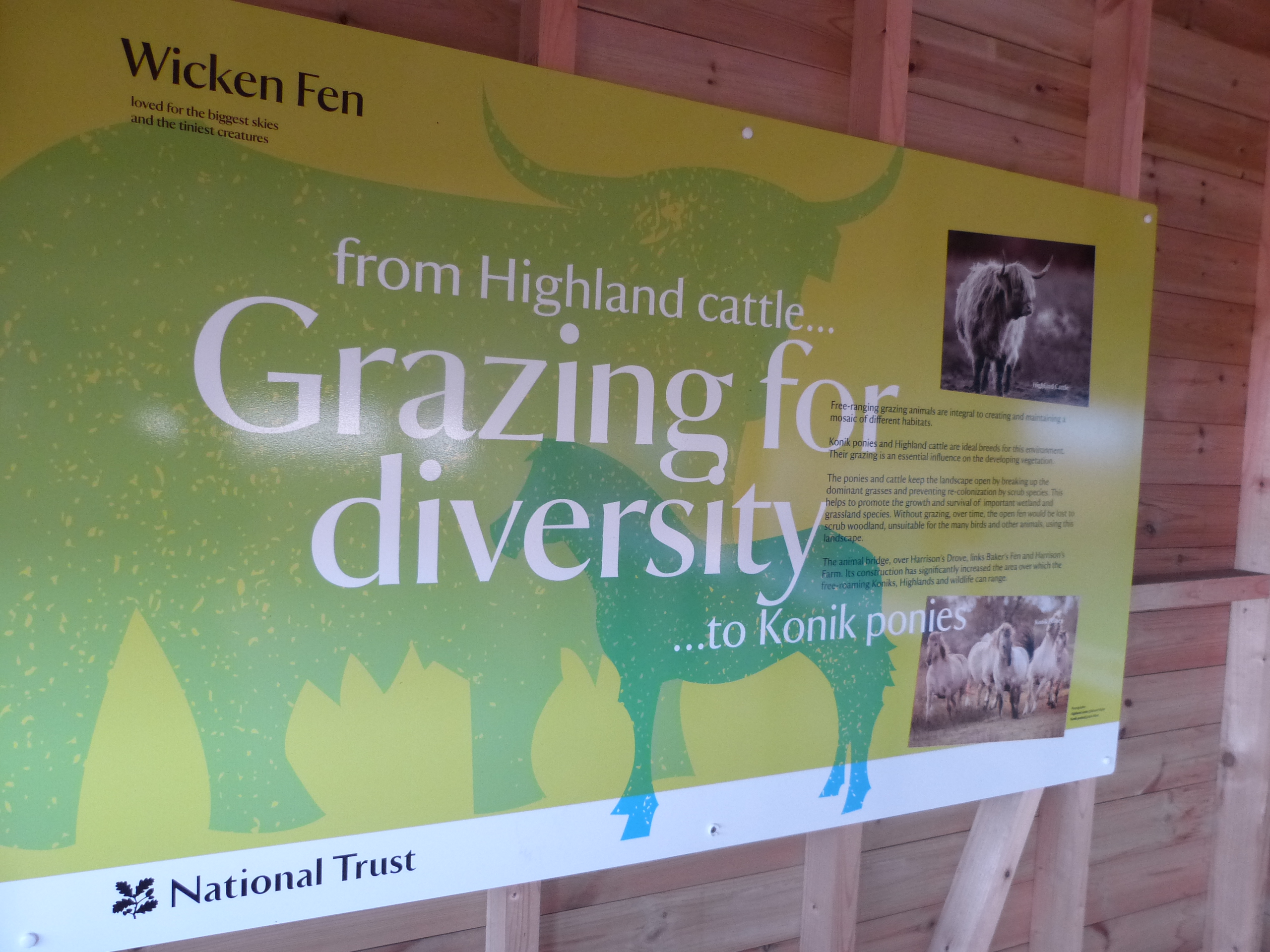
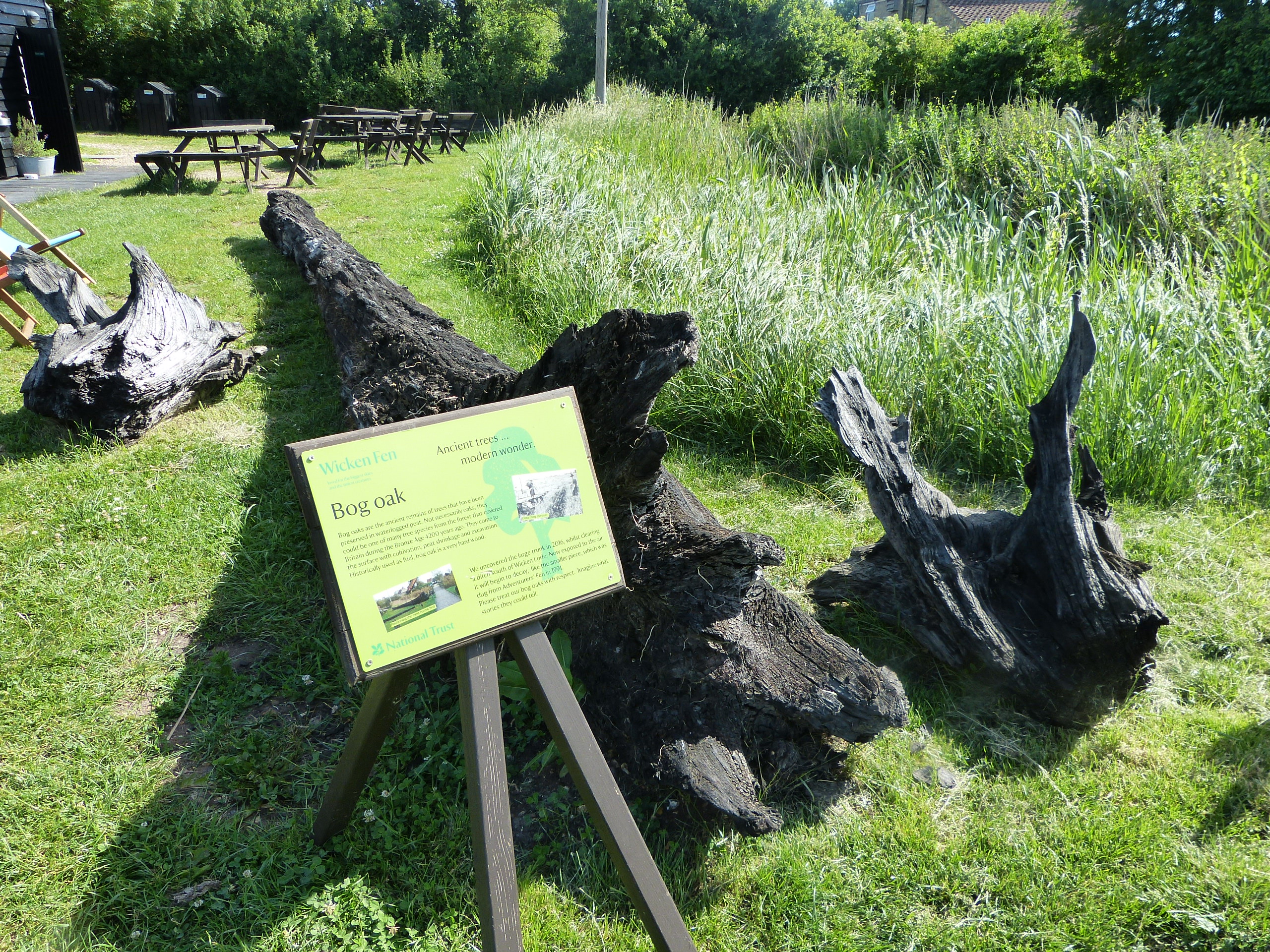
This walk begins on the outskirts of Burwell village on the edge of the fen and then passes through some of the lowest peatland in the area, found in Wicken Fen National Nature Reserve. Having followed three of the famous fen lodes, you climb onto the low ridge at Upware, known for its Jurassic ‘coral reef’ limestone. There is the chance to explore more of Wicken Fen and its National Trust Visitor Centre before ending in the village of Wicken. Burwell is at the base of the scarp of Cretaceous Chalk, here on the fen edge represented by the oldest of its strata, the West Melbury Marly Chalk. Its boundary with the Gault clay, approximately half way along Burwell Lode, can be seen in the soil of the fields which turns from whiteish to dark brown/grey. The route passes some relics of the local coprolite mining and brick-clay quarrying industries before crossing over Burwell Lode and to go through the famous area of Wicken Fen owned by the National Trust. A bird viewing hide gives you a chance to see Hobbies, Marsh harriers and many other birds that have been encouraged back to the fen.



© Cambridgeshire Geological Society